Tuesday, 24 January 2017

weekly news articles

Jack Keller, a producer for the web documentary series Story of America, said that he was detained for about 36 hours.

This article discusses how Four journalists have been charged with felonies after being arrested while covering the unrest around Donald Trump’s inauguration, and how at least six media workers are facing up to 10 years in prison and a $25,000 fine if convicted. The Committee to Protect Journalists (CPJ) made a statement saying that charges against journalists who were covering the protests should be dropped. Carlos LaurĂ­a, the CPJ’s senior Americas program coordinator has said that “These charges are clearly inappropriate, and we are concerned that they could send a chilling message to journalists covering future protests,”

I believe that freedom of press is coming under threat more and more as 2016 has seen a high record of journalist arrests, this is not decreasing. Journalists should be protected at all costs to provide their audiences with honest and good quality journalism, as these protests should not be ignored.


Netflix logo

This article discusses how hundreds of movies disappeared from Netflix over 2016 due to their decision to end several key content deals with top studios and distributors. As a result, original content by netflix has increased. According to the article Netflix's aspirations were no longer to be your on-demand DVD collection, but instead the place where you discovered and consumed new and exclusive shows.

  • Netflix has seen 7.05 million new subscribers in the last three months of 2016.
  • Netflix ended the year with 93.8 million subscribers in total 
  • In all, 2016 saw Netflix take in $8.83bn (£7.1bn) in revenue - with a profit of $186.7m (£151.6m).
I believe this is a bold move by netflix, but this is ultimately a threat to other distributers such as the BBC as Netflix has become more focused on taking up shows such as The Crown and labelling it as original content. As a result, the market becomes more competitive while also shaping the ways in which we consume shows.

Sunday, 22 January 2017

January assessment

1) Type up your feedback in full (you do not need to write mark/grade if you do not wish to).

40/48 = A-
WWW: Demonstrated sophisticated and detailed understanding 
EBI: The news industry/the press has been overlooked a little but you need to go over this more carefully. Write a paragraph covering this from both sides of the debate. 


2) Write which level you think YOU are currently working at for each one. Explain WHY and, for any that are not Level 4, what you are going to do to improve in that area. 


Level 4: I am working at a level 4 because this essay contained good critical autonomy and a good understanding of the new and digital media. However, to achieve a higher level 4 I will need to include a greater range of media debate or issues that are relevant to the question. 


3) Look at the Examiners' Report for this particular paper. Read page 10 - Section B New/digital media. How many of the good points or higher level answer examples did you include in your essay? What were they? What could you have added to improve your mark?

I achieved most of the good points of the higher level answer examples such as how the impact new and digital media has had on enabling audiences to participate and the concept of democracy itself. However, I could have included debates on the obstacles to equal participation and democracy such as the digital divide in the UK and globally, the power and control of media organisations. 

4) Read through these exemplar A grade essays from last year. What do these essays offer that yours does not? Identify THREE things you can take from these essays to improve your own responses in future.


  • Relevant examples in current day society that can be applied
  • Quotes and theorists viewpoints to support arguments
  • Statistics


5) The evolvement of the news industry due to new and digital media could be argued to have had a democratic impact. For example, one aspect that the internet has provided us with is citizen journalism, which has seen the rise of UGC making its way to traditional forms of media such as the news on TV. Citizen journalism has allowed users of the internet to share their forms of news either through videos, images and other forms of evidence. The fact that it bypasses gate keeping highlights the freedom in which we all have to avoid the selection and mediation process which often result in bias. We can post any event we have witnessed and bring perpetrators to justice, which is effectively a form of democracy. Furthermore, as the audience are more involved in citizen journalism, there is a sense of power being given to the people, which is another aspect of democracy. One example of positive citizen journalism is the Rodney king case, where a victim of police brutality had been filmed thus resulting in the police officer being brought to justice through his dismissal and sentencing.. The fact that this occurred in the early years of video phones suggests that new technologies and the development of the new media are having a democratic effect, Various other cases such as the death of Ian Tomlinson and the Ferguson riots have also made it to the news in the recent years through the internet, which suggest that that the new and digital media has become a democratic force for the greater good, as our abilities to participate have enabled us as an audience to create our own forms of news. However, there are disadvantages such as the fact that it bypasses gate keeping which suggests that there may be inaccuracies, resulting in poor material. Additionally, if we were all to be citizen journalists the quality of news could decrease, as referred to by Andrew keen, who likens internet bloggers as “million monkeys typing rubbish”. This highlights one of the disadvantages of a more democratic internet. Another disadvantage that the democratisation of new and digital media has resulted in is the fact that social networks now have a greater dominance over their audiences. Tailored news, which has grown in popularity on social media, can be seen in a negative light, as audiences are subject to algorithms which result in users getting news from similar sources with the same outlook. As a result, audiences are not exposed to various perspectives of the news, which can be argued to be undemocratic, and as 10% of online news users use only social media sites for news this essentially is a form of dumbing down audiences, which is not in line with the principles of democracy which are to empower the people.


In terms of the Marxist perspective, the development of new and digital media such as the internet can be argued to be a mediocre form of a new democratic space. Despite the freedoms it provides its audiences with, it is essentially a facade as almost all forms of new and digital media are run by media tycoons who manipulate our content so they can enforce their ideologies and values to the masses. Furthermore, social media sites fuel the digital divide, as the majority of socio economic groups use some form of social media and are subject to the values and the manipulations of the industry. This can be supported by Gramsas theory on hegemony, which argues that one social class dominates over the others, in this case the elite. This can be presented through the large conglomerates based in Silicon Valley, although in minority they control and own all the social media sites such as twitter, facebook and also news conglomerates and the content that we read on the internet. This effectively supports the theory of Paertos law, which states that the minority of the population control and own the most dominant and largest conglomerates which distribute all our news such as Viacom and Sky.  As a result, it can be argued that as audiences we are not free in terms of what we read and use, as they can all be used as tools against society to manipulate us. Galtung and ruge’s theory on news values also support the Marxist view as the dissemination of news is based on the interests and values of the producers. Therefore, as audiences we are subject to the values that the news industry carries, resulting in a lack of impartiality which is undemocratic. A pluralist on the other hand would agree that new and digital media provide the audiences with a democratic space, as audiences are now capable of manipulating what they read or use on the internet, in other words able to “conform, accommodate and reject”. The elite are argued as using their strengths to create flexibility on the internet for the purposes of the audience’s gratifications, and as they believe there is no one dominant group in society, we are all in some sense do have the power to participate equally.

Tuesday, 17 January 2017

weekly news articles


UK national newspapers front pages following Donald Trump’s US presidential victory.


This article discusses the concerns amid the rise of fake news, which is a threat to journalism. The News Media Association has previously warned ministers that Google and Facebook were unfairly making money out of journalism produced by its members. According to the article, the Labour party has also established its own inquiry into the changing ways that news is consumed and shared online, as well as the practical, political and ethical issues raised by fake news. Labour suggest that because dominant tech giants such as Facebook and Google provide the gateway to accessing new material, they should have a greater responsibility. As a result, it leaves the government facing similar policy challenges over plurality, ownership and potential monopolies that previous governments faced when newspapers were the dominant force.

I believe that it is important for the government to get involved to tackle the issue of fake news as this will have a serious effect on overall society and also in politics e.g. elections and so on. 


Dark days for Soundcloud … but is it worth saving?


This article discusses the continuing failures of various social media sites. For example, Soundcloud is in trouble despite signing licensing deals with the major record labels and accumulating 175 million users worldwide. As a result, the future of soundcloud now rests on whether it can get people to subscribe for money. Social blogs such as Medium are also facing a similar fate. It laid off 50 employees, closed offices in Washington and New York, and admitted its original plan to make money out of advertising wasn’t working. Commercial models to create revenue are also failing, such as ad-driven business models. The article continues to portray some of the positive advantages of social media through the example of Channel 4. They ditched words and static pictures online in favour of video only, then pushed everything on to Facebook. In 18 months they grew their Facebook audience from five million a month to 200 million. 

I believe this article is important as it suggests that there is a need for constant new models and changes on social media to keep up with the demands of users. As a result, it would be less likely for a company to go out of business or face uncertainty if they continue to adapt to the transformation of the social networking sphere.

Monday, 16 January 2017

Identities and the Media: Reading the riots

How did the language and selection of images in the coverage create a particular representation of young people?

The use of negative language such as "riots" and "feral youth" created a negative representation of young people, as these words carry connotations of destruction and immoral behaviour. The use of images of black teenagers in hoodies amongst burning wreckage also created similar implications, as it only fuelled the representation of young people as being dangerous and a threat to the moral stability of society.

Why does David Buckingham mention Owen Jones and his work Chavs: the demonisation of the working class?
 

Buckingham mentioned Owen Jones and his work Chavs as it points to the emergence of a new form of class contempt in modern Britain. The working class, he argues, has become an object of fear and ridicule, which could be suggested to be a reason for divisions within the classes and the reason for contempt for the working class as the majority of rioters were from this background.

What is the typical representation of young people – and teenage boys in particular? What did the 2005 IPSOS/MORI survey find?

In terms of the typical representation of young people, the survey found that 
40% of newspaper articles featuring young people focused on violence, crime or anti-social behaviour; and that 71% could be described as having a negative tone. This suggests that the media to some extent carry a role in promoting negative representation of young people. In regards to teenage boys, a study by the organisation Women in Journalism found that 72% of news stories were negative – more than twenty times the number of positive stories (3.4%). Over 75% were about crime, drugs, or police: the great majority of these were negative (81.5%) while only a handful were positive (0.3%). Many of the stories about teenage boys described them using disparaging words such as yobs, thugs, sick, feral, hoodies, louts, heartless, evil, frightening and scum.

How can Stanley Cohen’s work on Moral Panic be linked to the coverage of the riots?

Stanley Cohen's work on moral panic can be linked to the coverage of the riots as the theory suggests that the riots created a sense of 
 threat to societal values and interests due to the stereotypical fashion of reporting these stories by the mass media. This inevitably resulted in a much more general fear of young people, especially of working-class young people.

What elements of the media and popular culture were blamed for the riots?


The emergence of new technologies in the media and popular culture were blamed for the riots. Social networking sites such as Facebook and Twitter are argued to have been used to organise riots and lootings, with BBM being accused as being the prime aspect of these new networks. The Blackberry has revolutionised rioters as they could rapidly record and share images of the riots, while also synchronising and orchestrating riots in local areas.

How was social media blamed for the riots? What was interesting about the discussion of social media when compared to the Arab Spring in 2011?

Social media was blamed for the riots as it allowed for the riots to be co-ordinated across the country, and also fuelling the copycat phenomena. The Arab spring on the other hand, is used to argue the benefits of social media, as it has been used for the greater good to revolutionise the masses to bring down the oppressive regimes of their country, which contrasts the riots which consisted of mindless looting and violence.

The riots generated a huge amount of comment and opinion - both in mainstream and social media. How can the two-step flow theory be linked to the coverage of the riots?

The two-step flow theory can be linked to the coverage of the riots as the views of politicians of the youth being "violent" and "immoral" reinforced this image into the masses. Similarly, the views of rioters on social media may have influenced others to also partake in rioting.

Alternatively, how might media scholars like Henry Jenkins view the 'tsunami' of blogs, forums and social media comments? Do you agree that this shows the democratisation of the media?

Media scholars like Henry Jenkins would view the "tsunami" of blogs, forums and social media comments in a positive light due to the
 ‘participatory’ aspect of these new technologies. I believe that to some extent it does show the democratisation of the media as the audience have gained more powers to share their opinions and views on social media, nevertheless this is only to an extent as the "Big media" still do have some control over the media as these social networking sites are owned by the powerful, centralised corporations which control the media. 

What were the right-wing responses to the causes of the riots?

The right wing responses to the causes of the riots were based on the idea that the youth lacked any form of discipline or skills to contribute back to society. This theory suggests that the youth are at the bottom of the social hierachy.

What were the left-wing responses to the causes of the riots?

The left-wing responses consist of the idea that poverty and inequality were the causes of the riots. Most of the rioters came from deprived backgrounds, and various cuts to services that provided the youth a safe place and rising youth employment may have also contributed to sparking the riots.

What are your OWN views on the main causes of the riots?

I believe the main cause of the riots were due to the instability of society during the "Broken Britain" alongside with the oppression of the youth and the murder of Duggan. The long-standing image of youth as being dangerous only fuelled their anger even more, although it was not the right choice I believe it was due to the accumulation of problems suddenly erupting.

How can capitalism be blamed for the riots? What media theory (from our new/digital media unit) can this be linked to?

Capitalism can be blamed for the riots due to the fact that the 
disintegration in the highest ranks of modern British society has resulted in politicians having the capability to lie and to cheat, As a result, young men and women without hope or aspiration resort to chaos and rioting with their defence being that they are just following the example set by senior and respected figures in society.

Were people involved in the riots given a voice in the media to explain their participation?

The people in the riots were barely given a voice in the media to explain their participation, as the media was instead too focused on the various theories and ideas brought forward by politicians and members of the upper and middle class.

In the Guardian website's investigation into the causes of the riots, they did interview rioters themselves. Read this Guardian article from their Reading the Riots academic research project - what causes are outlined by those involved in the disturbances?

The causes outlined by those involved in the disturbances included opportunism to acquire goods that riots could not often afford, gang involvement, social media to plan riots in advance and political and economical grievances .

What is your own opinion on the riots? Do you have sympathy with those involved or do you believe strong prison sentences are the right approach to prevent such events happening in future?


Personally, as a young person I do feel sympathy for those involved as the riots took place at a time where the youth and black people were being oppressed, furthermore the effects of recession were hard felt during the period, resulting in an outbreak of riots. However, I do not believe rioting should have been a response to these oppressions, and that instead peaceful protesting would have been a better choice. On the other hand it can also be argued that rioting was the only way for the discontent of society, especially the youth to be heard. Overall, I believe there should be strong prison sentences for those who have caused a lot of damage and harm amongst others, but not for those who were involved in petty acts or crimes. 

Tuesday, 10 January 2017

weekly news articles

Image result for privacy facebook


This article discusses the proposal under the EC (European ePrivacy) on the new rules on the tracking of users. The right to privacy and control of data for European citizens will be enforced under these new legislations. Messaging, email and voice services such as those provided by Facebook, Google and Microsoft will be forced to guarantee the confidentiality of conversations and metadata. Listening to, tapping, intercepting, scanning or the storing of communications will not be allowed without the consent of the user, unless it is critical for billing or other purposes. In terms of cookies, which currently require consent for all purposes will be simplified as some aspects of websites will no longer need them. However, these changes may be a disadvantage towards online advertisers who have warned that overly strict rules would undermine the ability of many websites to fund themselves and offer free services.
  • Online advertising generates £10bn ($12bn) of revenue for publishers and content creators in the UK alone, according to the IAB.
I believe that these tighter rules on the privacy of users is a positive, as users have become victims of datamining without their consent. However, this will have an impact on websites which do depend on datamining as ad revenue this the only revenue they may recieve


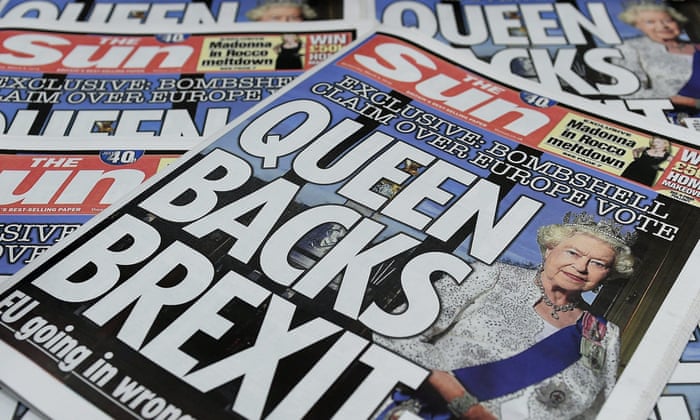
This article discusses the losses that the Sun has made due to the steep decline in print advertising revenue alongside with the redundancy costs and phone-hacking charges which have had a strong impact on the tabloid newspaper. The main cause of this decline according to the sun were due to the the challenging market conditions for newspaper print advertising with double-digit declines currently common across the industry.“The print advertising revenue decline offset the growth in both print circulation [revenue], supported by an increase in the Monday to Friday cover price during the year, and excellent digital advertising growth, following the removal of the paywall for the Sun website.”
  • The Sun said it had made £16m in profit last year, almost half the £29m in 2015.
  • Total revenues fell from £456m to £446m as a steep decline in print advertising failed to be offset by income from other areas, including the now free-access Sun website. The Sun scrapped its paywall in November 2015 after two years
I believe this article is important as it highlights the importance of advertising revenue to protect print newspapers, it also suggests that the paywall scheme did not have the greatest outcome for the Sun. This suggests that the paywall is not for some newspapers, as their readers may not be able to afford it.

Tuesday, 3 January 2017

weekly news articles


This article discusses the implications of algorithms on social media. A prominent example that has been used to show this is the Facebook algorithm, in which the online space that we spend more time in shows us a version of the world that isn’t quite balanced or true due to the fact that the algorithms learn our habits and preferences. As a result, our social feeds are flooded with content that is hardly balanced. Audiences are encouraged to simply unfollow newsbrands that we wouldn’t get on with, and so the news headlines we see online are mostly in agreement with each other. This however benefits the social networking site, as these functions prevent cluttering and provide tech-savvy businesses with the apparatus to reach potential customers that might otherwise pass them by.

I agree with the fact that algorithms do have implications due to the fact that they provide their audiences with an unbalanced perception of the world and news, however there are some benefits of tailor-made news, as this allows audiences to be comfortable with the platform they are on while also benefiting the site and providing adverts revenue. 


This articles discusses the latest statistics on newsbrand revenue, and how publishers have had a major impact on the economy. Despite the challenging era of falling newspaper profitability due to the declining advertising revenues, the report finds that the news media industry generated £4.8bn revenue through circulation and advertising over the course of 2015. According to the report, publishers are by far the biggest investors in original news content, accounting for 58% of the total investment in news production. However, future contributions rest on their ability to monetise newsbrand content, particularly on digital platforms, in order to fund newsgathering. Agenda-setting newspaper journalism, such as the Guardian’s Panama Papers revelations and the Sunday Times’s investigation into Fifa have been a positive aspect of these newspaper brands and have dominated in the news, as a result reeling in greater audiences. 
  • The sector also supported an estimated 87,500 UK jobs; invested £97m in digital services; and added value across the supply chain because the average publisher dealt with nearly 2,600 suppliers.
  • 90% of the total spend with suppliers by news media organisations remained within the UK, compared to the average of 77% across the economy.
I believe that this is good news for the media industry, in particular newspapers as it hints at the possible survival of traditional forms of media. However, it does highlight the necessity of third-party investors to keep up these forms of media.

NDM case study: News on the Tweet

Why are respected news brands good news for Twitter?

Respected news brands are good for Twitter due to the fact that they are a reliable and trustworthy source, and with a wider platform more people will follow and engage with these newsbrands through their twitter account which brings in a greater audience and more revenue for Twitter. 

Why in turn is Twitter good for respected news brands?

In return, Twitter is good for respected news brands because it makes them more accessible to their audience, allowing the newsbrands to be more influential and even more connected to their audience. Twitter becomes a platform for immediate knowledge and many will become familiar with news brands they would often not engage with.

The report suggests that old and new media “are not, in fact, in direct competition, but often work extremely well together to enhance both the media eco-system and the consumer experience”. What evidence do they provide to support this idea? Do you agree with it?

The evidence to support the theory that old and new media work extemely well together is presented through the fact that Twitter, a social media network, provides a platform for traditional newspaper brands. I agree with this concept due to the fact that it has allowed audiences to engage with a variety of newsbrands, while also benefiting traditional forms of media and new technologies

On page 24/25 of the report, the focus turns to 'gossip' or 'banter'. What example tweets from journalists are used to illustrate this? 

The examples used from the journalist to illustrate "gossip" or "banter" contain puns and sarcastic headlines. This highlights the light-heartedness of these articles, as they have a less serious approach and often contain funny references.

Do you think the increasing amount of 'gossip' or 'banter' is harming the reputation of news and journalists?

I believe that to some extent that an excess in "gossip" or "banter" can degrade a news website as it will replicate a low brow tabloid. Some consumers also do not find the degradation of celebrities through embarrassing articles appropriate nor funny, so it can have an impact on the reputation of journalists and the news due to the low quality articles. 

What does the report say about trust in Twitter and journalists (look at pages 34-39)?

The report states that almost half of all Twitter users, and almost two thirds of newsbrand users, say it is important that news on Twitter is verified by a respected brand, and that this is essential in building trust in the content. For example, if journalists tweet honest views or entertainment and engage with their audiences through building up interaction, audiences in return will have a more personal connection with the journalists which will build trust in their content. 

Do you think new and digital media developments such as Twitter have had a positive or negative impact on traditional newspapers?

I believe that new and digital media developments such as twitter can have a positive impact on traditional newspapers. Social networking sites provide a platform in which audiences can interact with these newspapers and have regular updates on the news. However, these developments can have a negative impact if the newspaper has a negative representation through its journalists for example. 

Finally, how can we link this report to the vital current debate regarding fake news and Facebook? Do traditional news brands need protecting to ensure there are sources we can trust?

I believe this report can be linked to the current debate regarding fake news, as the report highlights how necessary it is for audiences to trust their sources. It suggests that there should be a connection between journalists and the audiences on some level of interaction to create trust, which Facebook does not provide. Traditional news brands need to establish their authority as valuable news sources, while also being user-friendly and engaging rather than just providing instant access on such platforms.